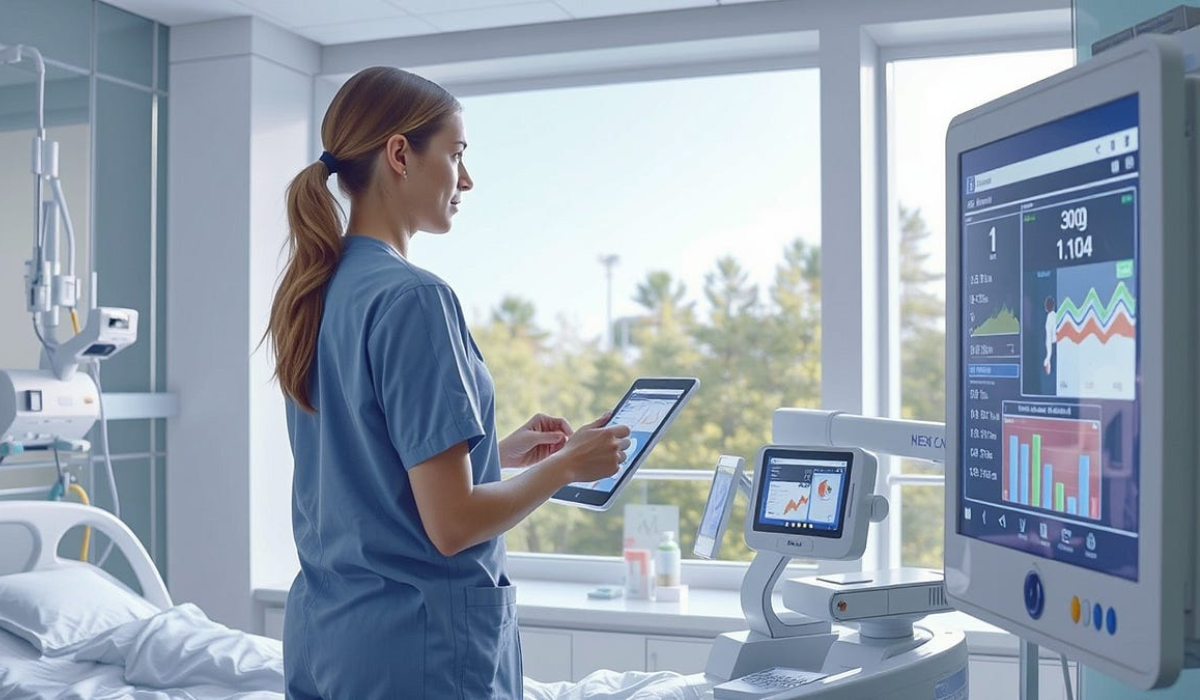
For years, families had only two choices when an aging parent or chronically ill loved one needed medical support: frequent hospital visits or long-term care facilities. Both options were expensive, stressful, and emotionally exhausting. Most people accepted this system because they thought there was no alternative.
That is no longer true.
Today, future healthcare technology is elevating at-home care in ways that were almost impossible a decade ago. We are now seeing homes turn into connected care environments where doctors, caregivers, AI systems, and smart medical devices work together in real time.
And honestly, this shift is bigger than most people realize.
This is not just about convenience. It is about helping people stay independent longer, reducing preventable hospital visits, lowering healthcare costs, and giving families peace of mind.
In my experience, most people still think at-home care means occasional nurse visits or video calls with a doctor. A better way to approach it is to see modern home healthcare as a full digital ecosystem powered by remote monitoring, AI-driven insights, wearable devices, smart home systems, and predictive care platforms.
The healthcare industry is moving away from reactive treatment and toward continuous health management. That single shift is changing everything.
Let’s break down exactly how future healthcare technology is elevating at-home care and why this matters for patients, families, healthcare providers, and the future of medicine itself.
Why At-Home Care Is Becoming the Future of Healthcare
One of the biggest mistakes people make is assuming this trend is only about technology. It is actually being driven by several major healthcare problems happening at the same time.
These include:
- Aging populations
- Rising healthcare costs
- Chronic disease growth
- Hospital overcrowding
- Healthcare worker shortages
- Increased demand for personalized care
According to industry research from major healthcare organizations like McKinsey, billions of dollars in healthcare services are expected to shift from hospitals into home-based care models over the coming years.
Why?
Because home care often produces better outcomes at lower costs.
Think about it this way.
Hospitals are designed for acute emergencies. But many patients do not actually need to stay in hospitals for long periods. They simply need continuous monitoring, medication management, rehabilitation support, and early intervention systems.
Technology now makes that possible directly from home.
The Shift From “Healthcare” to “Continuous Health”
This is where things get really interesting.
Traditional healthcare has always been reactive.
You feel sick → you visit a doctor → tests happen → treatment begins.
Future healthcare technology flips that model completely.
Now, systems can identify risks before symptoms become dangerous.
That is a massive change.
Modern healthcare technologies monitor:
- Heart rate
- Oxygen levels
- Sleep quality
- Blood pressure
- Blood sugar
- Medication adherence
- Movement patterns
- Fall risks
- Behavioral changes
And they do this continuously.
In my opinion, this is the most important development in modern healthcare because prevention is almost always cheaper, safer, and more effective than emergency treatment.
Remote Patient Monitoring Is Changing Everything
Remote Patient Monitoring (RPM) is one of the biggest reasons at-home care is expanding so quickly.
Most people underestimate how powerful RPM really is.
These systems use connected medical devices to send real-time health data directly to care teams. Doctors no longer need to rely only on occasional appointments because they can now monitor patients continuously.
That changes the entire healthcare model.
Common RPM Devices Include:
- Smart blood pressure monitors
- Glucose monitoring systems
- Wearable ECG devices
- Pulse oximeters
- Smart scales
- Fall detection wearables
The real power is not the device itself. It is what happens with the data afterward.
AI systems can detect unusual patterns early and alert healthcare providers before small problems become medical emergencies.
Real-World Example
Imagine an older patient with congestive heart failure living alone.
A connected smart scale notices sudden weight gain over three days. Most people would ignore this. But AI systems recognize that rapid weight gain may indicate fluid retention and worsening heart failure.
The care team receives an alert, adjusts medication early, and prevents hospitalization.
No ambulance.
No emergency room chaos.
No major health crisis.
That is how future healthcare technology is elevating at-home care in practical terms.
AI in Home Healthcare Is Becoming a Silent Assistant
Whenever people hear “AI in healthcare,” they often assume robots will replace doctors.
That is not what is happening.
AI works best as a support system, not a replacement.
In my experience, the smartest healthcare organizations use AI to reduce noise, improve decision-making, and help clinicians focus on high-risk patients faster.
AI systems can now:
- Analyze large patient datasets
- Detect health deterioration patterns
- Predict hospital readmission risks
- Automate documentation
- Prioritize urgent alerts
- Support medication management
This matters because healthcare workers are overwhelmed.
Burnout is a serious issue across hospitals and care systems. AI helps reduce repetitive administrative tasks so providers can spend more time caring for actual people.
And honestly, most patients prefer that.
Telehealth Is No Longer Optional
A few years ago, telehealth felt like a convenience feature.
Now it is becoming a core healthcare service.
For seniors, patients with disabilities, and people living in rural areas, virtual healthcare can remove major barriers to treatment.
Instead of:
- arranging transportation,
- waiting in crowded clinics,
- or missing appointments,
patients can access care directly from home.
Modern Telehealth Includes:
- Video consultations
- Secure messaging
- Voice-based healthcare systems
- Mental health therapy
- Remote rehabilitation sessions
- Chronic disease follow-ups
One thing most companies get wrong is usability.
If healthcare technology feels confusing, elderly patients will avoid using it.
The best telehealth systems are simple, clean, and easy to navigate with large buttons, voice commands, and clear instructions.
That sounds basic, but it dramatically improves adoption rates.
Wearable Healthcare Devices Are Becoming Smarter
Wearables are no longer just fitness gadgets.
Modern wearable healthcare devices can monitor serious medical conditions with impressive accuracy.
Some advanced systems can track:
- Irregular heart rhythms
- Blood oxygen fluctuations
- Stress indicators
- Fall events
- Sleep disorders
- Glucose levels
And this technology is improving fast.
In my opinion, wearables are becoming one of the most valuable tools in preventive healthcare because they collect continuous real-world health data rather than isolated snapshots during doctor visits.
That difference matters more than people think.
A patient’s health condition at home is often very different from how they appear during a short clinical appointment.
Smart Homes Are Becoming Healthcare Environments
This is one of the most overlooked trends in healthcare technology.
Homes themselves are becoming intelligent care systems.
Smart home healthcare technologies now include:
- Voice assistants
- Smart medication reminders
- Automated lighting systems
- Fall detection sensors
- Smart toilets
- Motion tracking systems
- Bed occupancy monitoring
That may sound futuristic, but many of these systems already exist today.
Passive vs Active Monitoring
One of the smartest distinctions researchers make is between active and passive healthcare systems.
Active Systems
Require user interaction.
Examples:
- Smartwatches
- Wearable monitors
- Emergency buttons
Passive Systems
Operate automatically in the background.
Examples:
- Sensors in flooring
- Smart beds
- Motion analysis systems
- Environmental monitoring devices
Passive systems are especially important for elderly patients because they do not rely on memory or technical ability.
The technology simply works quietly in the background.
Medication Management Technology Prevents Serious Mistakes
Medication errors remain one of the biggest risks in home healthcare.
Missed doses, incorrect timing, or accidental double dosing can quickly lead to emergencies.
Technology is helping solve this problem.
Modern medication management systems can:
- Send reminders
- Alert caregivers
- Track adherence
- Detect missed doses
- Monitor prescription schedules
Most people underestimate how dangerous medication confusion becomes as people age.
A better approach is using automated systems that reduce human error without removing independence.
AI-Powered Predictive Care Is the Real Game Changer
If I had to identify the biggest future trend in at-home healthcare, it would be predictive care.
We are moving toward systems that do not just monitor patients.
They predict problems before they happen.
That changes healthcare completely.
AI-driven predictive systems can analyze:
- Vital sign trends
- Behavioral changes
- Sleep disruptions
- Mobility declines
- Medication adherence patterns
These systems identify subtle warning signs long before humans typically notice them.
And that leads to earlier intervention.
The healthcare industry is slowly shifting from:
“Treat illness after symptoms appear”
to:
“Prevent emergencies before they happen.”
That is the real future.
Cybersecurity and Patient Trust Matter More Than Ever
Here is something many articles ignore.
As healthcare becomes more digital, patient trust becomes incredibly important.
People are sharing highly sensitive medical data through connected devices, cloud systems, and healthcare platforms.
That creates serious privacy concerns.
Healthcare companies now need strong:
- Encryption systems
- Access controls
- Data governance frameworks
- Cybersecurity monitoring
- Compliance systems
In my opinion, the companies that succeed long term will not simply have the smartest AI.
They will have the strongest trust infrastructure.
Because without trust, patients will not adopt the technology.
Robotics in Home Care Is Closer Than Most People Think
Many people assume healthcare robots belong in science fiction.
Actually, robotics is already entering at-home care in smaller but meaningful ways.
Current robotic systems can help with:
- Mobility assistance
- Medication delivery
- Patient lifting support
- Fall detection
- Social companionship
Now, robots are not replacing caregivers anytime soon.
But they are becoming valuable support tools.
This is especially important because caregiver shortages are becoming a major global healthcare challenge.
Real-World Scenario: What Modern At-Home Care Actually Looks Like
Let me give you a practical example.
An 82-year-old patient lives alone with diabetes and mild heart disease.
Here is what modern at-home healthcare may look like:
- A wearable tracks heart rate and glucose levels
- A smart pill dispenser manages medication timing
- Motion sensors monitor movement patterns
- Telehealth appointments replace unnecessary travel
- AI systems detect early warning signs
- Family members receive alerts if unusual behavior occurs
- Care teams monitor health data remotely
Now compare that to the old model where doctors only saw the patient every few months.
The difference is enormous.
This is why healthcare systems are investing heavily in home-based care ecosystems.
Benefits of Future Healthcare Technology in At-Home Care
Better Patient Independence
People can stay in familiar environments longer.
Lower Healthcare Costs
Preventive monitoring reduces emergency care expenses.
Reduced Hospital Readmissions
Early intervention prevents complications.
Improved Chronic Disease Management
Continuous monitoring supports long-term treatment.
Better Family Peace of Mind
Loved ones stay informed without constant stress.
More Personalized Care
Healthcare becomes data-driven and individualized.
Common Mistakes Families Still Make
In my experience, families often make three major mistakes when adopting home healthcare technology.
1. Waiting Too Long
Many people only consider technology after a medical crisis happens.
Early adoption works far better.
2. Choosing Complicated Systems
If the system feels confusing, patients stop using it.
Simple systems usually work best.
3. Ignoring Maintenance and Updates
Healthcare technology is not “set and forget.”
Software updates, device monitoring, and support matter long term.
What the Future of At-Home Healthcare Will Look Like
Over the next decade, home healthcare will likely become far more intelligent and connected.
We will probably see:
- AI-powered virtual health assistants
- Fully integrated smart homes
- More accurate predictive analytics
- Advanced robotic caregiving tools
- Personalized treatment algorithms
- Continuous biometric monitoring
- Hospital-level diagnostics at home
And honestly, I believe many routine healthcare services will eventually move out of hospitals entirely.
Hospitals will focus mainly on critical emergencies and advanced procedures, while ongoing care increasingly happens at home.
Final Thoughts
Future healthcare technology is elevating at-home care in ways that go far beyond convenience.
It is creating a healthcare system that is more proactive, more personalized, and more focused on keeping people healthy instead of simply treating illness after problems escalate.
The biggest shift is not the devices themselves.
It is the mindset behind them.
Healthcare is moving from episodic treatment toward continuous care ecosystems built around prevention, monitoring, and early intervention.
And for aging Americans, families managing chronic conditions, and overwhelmed healthcare systems, that shift could not come at a better time.
The future of healthcare is not just inside hospitals anymore.
Increasingly, it is happening right at home.
Frequently Asked Questions
What is future healthcare technology in at-home care?
Future healthcare technology in at-home care refers to tools like remote patient monitoring, AI systems, telehealth platforms, wearable devices, and smart home technologies that allow medical care to happen safely and effectively at home.
How does AI improve at-home healthcare?
AI improves at-home healthcare by analyzing patient data, predicting health risks, automating monitoring tasks, and helping healthcare providers detect problems earlier before they become emergencies.
What are the benefits of remote patient monitoring?
Remote patient monitoring helps reduce hospital visits, improves chronic disease management, supports early intervention, and allows doctors to track patient health continuously from home.
Is at-home healthcare technology safe for elderly patients?
Yes. When properly designed, at-home healthcare technology improves safety through fall detection, medication reminders, emergency alerts, and continuous health monitoring systems.
Will technology replace caregivers and doctors?
No. Technology is designed to support caregivers and healthcare providers, not replace them. Human care, emotional support, and medical decision-making remain essential parts of healthcare.
Also Read: Revo Technologies: A Technological Powerhouse in Murray, Utah